What is the Average Interest Rate on a Student Loan_
What is the Average Interest Rate on a Student Loan?
Navigating the complexities of student loans can feel overwhelming, especially when trying to understand the interest rates you'll be charged. Understanding the average interest rate on a student loan is crucial for making informed decisions about borrowing and repayment. This article breaks down the factors influencing student loan interest rates and provides a snapshot of current averages.
Why Student Loan Interest Rates Matter
The interest rate is the percentage of your loan principal that you're charged for borrowing money. It's a significant factor in the total cost of your loan. A higher interest rate means you'll pay more over the life of the loan, potentially adding thousands of dollars to your overall debt. Conversely, a lower interest rate can save you a substantial amount of money in the long run. Therefore, comparing and understanding these rates is paramount.
Factors Influencing Student Loan Interest Rates
Several factors determine the interest rate you'll receive on a student loan. These include:
*
Loan Type:
Federal and private student loans have different interest rate structures. *Federal vs. Private Loans:
Federal student loans typically have fixed interest rates set by Congress, while private student loans are offered by banks and other financial institutions and often have variable interest rates tied to benchmarks like the Prime Rate or SOFR (Secured Overnight Financing Rate). This means private loan rates can fluctuate over time. *Credit Score (For Private Loans):
Private lenders heavily weigh your credit score and credit history. A higher credit score generally results in a lower interest rate. Borrowers with little or no credit history may need a cosigner to secure a loan at a favorable rate. *Loan Term:
The length of your repayment period can also influence the interest rate. Shorter loan terms might come with slightly lower rates, while longer terms may have higher rates to compensate the lender for the extended risk. *Economic Conditions:
Broader economic factors, such as inflation and the overall interest rate environment, can impact student loan rates, particularly for private loans with variable rates. *The Year the Loan was Issued:
Interest rates on federal loans are determined at the time of disbursement.Average Interest Rates: A Snapshot
It's important to remember that "average" rates are just benchmarks. Your individual rate will depend on your specific circumstances. However, here's a general overview:
*
Federal Student Loans:
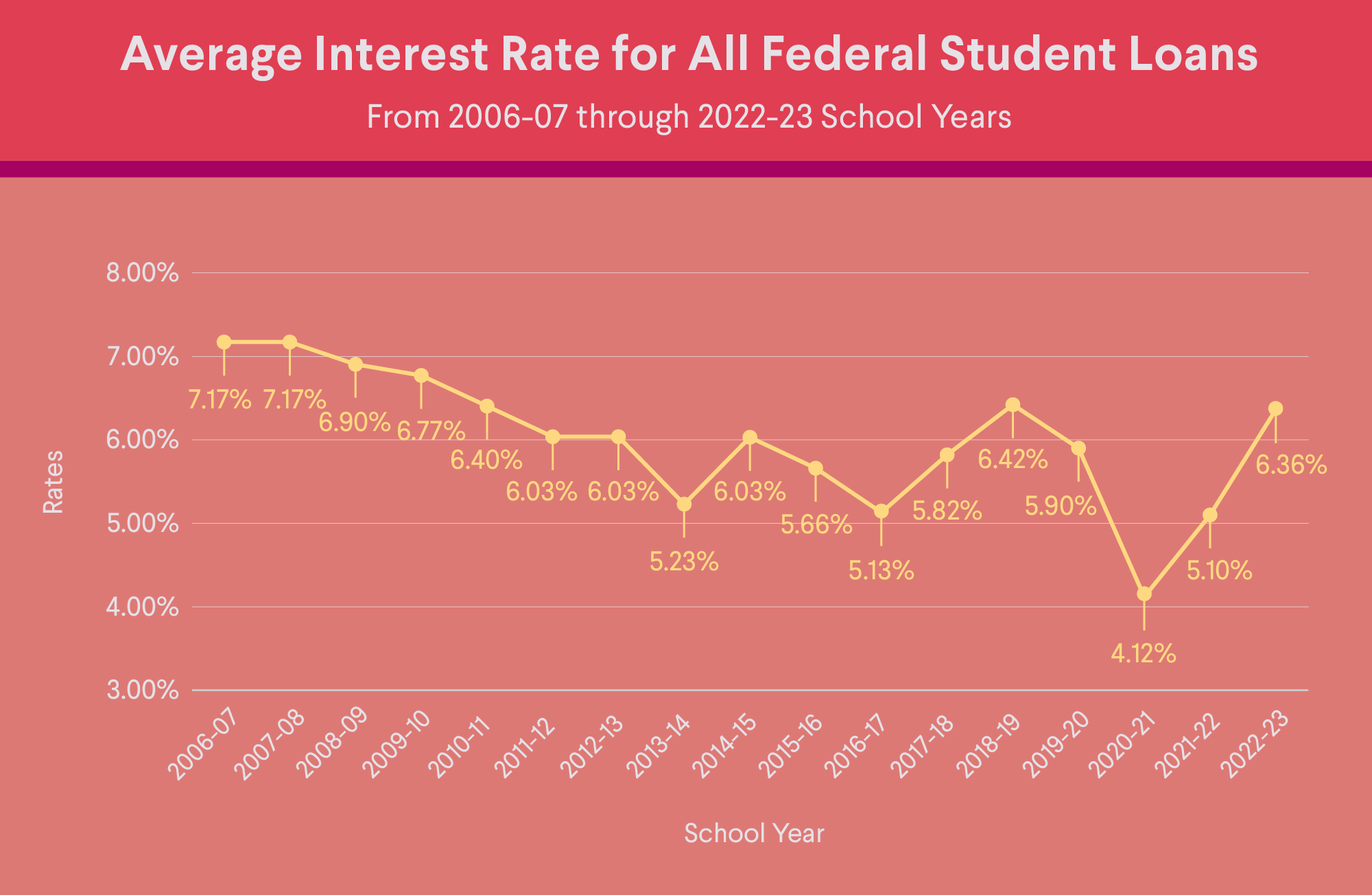
Federal student loan interest rates are set annually by Congress and depend on the loan type and the year the loan was disbursed. You can find historical rates on the Department of Education's website. Generally, rates are higher for unsubsidized loans and PLUS loans (for graduate students and parents). *Private Student Loans:
Private student loan rates are more variable. According to recent data, fixed rates can range from around 4% to over 13%, while variable rates can be even higher. These ranges fluctuate depending on the lender, the borrower's creditworthiness, and the prevailing market conditions.Where to Find Current Interest Rate Information
*
U.S. Department of Education:
For federal student loan rates, the Department of Education's website is the definitive source. *Lender Websites:
Check the websites of private lenders for their current interest rate offerings. Many lenders provide rate estimates based on your credit profile. *Comparison Websites:
Utilize online tools that compare student loan interest rates from multiple lenders. These tools can help you identify the most competitive offers.Tips for Securing a Lower Interest Rate
*
Improve Your Credit Score:
Pay bills on time, reduce your credit utilization ratio, and check your credit report for errors. *Consider a Cosigner:
If you have limited credit history, a cosigner with good credit can help you qualify for a lower rate on a private loan. *Shop Around:
Don't settle for the first loan offer you receive. Compare rates from multiple lenders to find the best deal. *Refinance Your Loans:
If you already have student loans, consider refinancing to a lower interest rate. This can save you a significant amount of money over the life of the loan. Remember, refinancing a federal loan into a private loan means losing federal protections and benefits.In Conclusion
Understanding the average interest rate on a student loan is a critical step in making informed borrowing decisions. By considering the factors that influence rates and shopping around for the best offers, you can minimize the overall cost of your education and set yourself up for financial success. What is the Average Interest Rate on a Student Loan_ . Remember to do your research and choose a loan that fits your individual needs and financial circumstances.


Comments
Post a Comment